
Robotic Whipple Procedure for an Ampullary Intramucosal Carcinoma
Transcription
CHAPTER 1
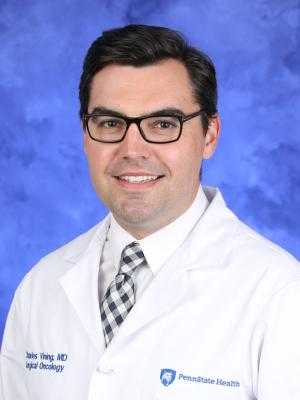
My name is Charles Vining. I'm a surgical oncologist at Penn State Hershey Medical Center. And the case that we have planned today is a robotic Whipple procedure. This patient originally presented with iron deficiency anemia, which subsequently prompted an upper and lower endoscopy. And upon his upper endoscopy, he was found to have a duodenal mass. The duodenal mass was biopsied and was consistent with at least intramucosal adenocarcinoma. It was evaluated by our gastroenterologists and they felt that this was not something that they could endoscopically resect, and there was a little bit of concerning lymphadenopathy. And for that reason we talked to the patient about proceeding to the operating room for a surgical resection. The Whipple procedure is a pancreaticoduodenectomy or removing the head of the pancreas portion of the stomach, the first portion of the small intestines called the duodenum. The distal bile duct and the gallbladder with a complex reconstruction, bringing the intestines back to the pancreas, the intestines back to the bile duct, and then the intestines back to the stomach, and that's what we plan to do today. So it's a technically challenging case. It's a long case, and it's good to do this with experienced help. You know, the first portion of this operation, after doing a diagnostic laparoscopy to look for evidence of metastatic disease is to mobilize the right colon. So we start by mobilizing the right colon, and then after that we Kocherize the duodenum out from the retroperitoneum. I find one of the most challenging aspects of doing a robotic Whipple is trying to eviscerate the proximal jejunum through the retro mesenteric window through the ligament of Treitz, and so that's typically a bit of a challenging point. This patient also had multiple biopsies from his cancer, and I expect there's gonna be some inflammation down around the duodenum, which is gonna make this a little bit more challenging. That's sort of the first thing, whether or not you can bring the small intestines underneath the root of the mesentery to the right side of the abdomen, and then you have to divide that. After that, it's usually relatively straightforward, you have to divide the stomach. To divide the stomach, you first need to divide the gastroepiploic arcade and then the right gastric artery. And then from there, I usually remove the station 8 lymph node. The station 8 lymph node will help you identify where the portal vein is and the hepatic artery is. Once you identify the portal vein and the common hepatic artery, you can trace that distally to find your gastroduodenal artery. The gastroduodenal artery at this point would be circumferentially dissected, and then divided. I typically divide this with a stapler. After that I continued the dissection to identify the common bile duct. Once the common bile duct has been identified, they usually at that point perform the cholecystectomy by removing the gallbladder. Once the gallbladder has been removed, we identify and circumferentially dissect around the common bile duct. Once the common bile duct has been circumferentially dissected, we will staple that off. The final aspect is I'm creating a retropancreatic tunnel, a tunnel behind the neck of the pancreas that is above the superior mesenteric vein, below where the splenic vein joins the superior mesenteric vein at that point where it then becomes the portal vein. So you find the portal vein from above. You open up the peritoneum on the inferior aspect of the pancreas to identify where the superior mesentric vein is, and then you have to very gently make a retropancreatic tunnel. Once you identify it and create that retropancreatic tunnel, we tend to divide the pancreas. I divide it with the robotic scissors and I try to cut across the duct if I'm able to find it. Once the pancreas has been divided, the final aspect of the resection aspect of this operation is removing the uncinate off of the mesenteric vessel. So in particular, the superior mesenteric vein and the superior mesenteric artery. Again, with the robotic Whipple, one of the challenging aspects is linearizing the duodenum, or straightening it out. And so at that point, I usually will ask to get senior level assistance. So I'll call my partner in to help me. We then remove the uncinate off the superior mesenteric artery and superior mesenteric vein, and that completes the resection aspect of the operation. After that, it's typically about two more hours where we have to reconstruct, where we sew the pancreas back to the intestines first, followed by the bile duct to the intestines, and then the stomach to the intestines. The aspect that is associated with the highest morbidity in this operation is the pancreaticojejunostomy, or the connection between the pancreas and the intestines. And that is the anastomosis or connection that is done first and is the one that is most technically challenging and determines the morbidity associated with the operation, and so you've gotta be very mindful of this.
CHAPTER 2
Okay, marking pen, please. So we're gonna mark out his xiphoid right here, and then his costal margin. Over here. We'll mark out his costal margin. Yep. We'll mark out his anterior superior iliac spine here. Like so. And then midline for him is here. That's midline. Down to his pubic symphysis. If need be. And then, midpoint between these sort of crosses like that. So our first port is gonna go probably approximately... I think that will be... I think that will be good to start. And then about a handsbreadth below that, that's where we would make our mini-Pfannenstiel incision. Okay. Can I get a knife please? 15. Thank you. And then I'll take a Schnidt. I'm gonna go a little bit above that. All right, very good. Can we get the gas on? 15 high flow. Drop that in there. Set high flow? Yes, please. High flow. We're gonna do direct optical entry here. Can you put your finger on that? We should be insufflating. We'll just have a quick look here. And the first thing that we're gonna do is we're gonna do a diagnostic laparoscopy to look for evidence of metastatic disease. Can we get the room lights down please? There is a concerning nodule. I think we're gonna need that peritoneal biopsy forcep. Okay? I'll take that peritoneal biopsy forcep. All right, I'm gonna give that whole thing to you, I'll take the... I use that, it doesn't disturb it that much, and it gets into the little crevices. You know? Specimen out. Frozen. What are we calling it? Liver biopsy. Liver biopsy for frozen. Liver biopsy, frozen, got it. Hello. Hey, we have a frozen section for patient biopsy. There is small focus of this atypical ductular glandular proliferation, but I feel it's benign and a normal hamartoma, but not 100% sure on frozen section. Okay. Okay, alright, thank you. I think we will proceed. Thank you. Okay, bye. Bye. So hard to say. Yeah, a little bit unique there, but he's favoring a benign process, so let's proceed. Okay, I'll have you hold that there. Mark- knife please. This is gonna be a eight. Eight, yep. This will be the air seal. Now we're gonna take this guy and we're gonna swing this over to here and take this guy off. Can you close that port? Can you put your finger on that? I'll take the next eight. Very good. All right, do you wanna come on over to the other side now? I'm gonna have you look at this falciform here. Can I get a bowel grasper? If you could take a look, hold the camera and take a look at that.
CHAPTER 3
We're gonna now mobilize this falciform off the anterior abdominal wall. Look up at the falci. And as I continue the dissection, move the camera along if you can. So can you center my working instrument? Like that? Yep, and you can come in a little bit and just center my working instrument. Yep, just keep following it. All right. All right, and now I'm gonna have you come back now. Very good. Okay, I'll take that endoloop. Scissor, please. The next I'll take the Carter-Thomason. Can you try to look at the suture? I'll take a knife first, please. I'll take a Ray-Tec and a snap. All righty, and that should hold that liver up enough there. All righty, can I get that bowel grasper back? Thank you. Put that up there for now. All right, can you look back at this port? Yep, keep looking at this port. Turn, turn, turn. Keep looking at it, yep. Keep looking at it. Turn, turn, turn, turn more if you can. There you go. Just bringing this back into the abdominal wall a little bit. Okay, very good. You can take that camera out.
CHAPTER 4
Alright, now I'll take a knife. You can put that camera down. All right, can you come up here and hold this guy up that way, we'll make our incision just a little bit above that. With your other hand, if you could hold up on that guy, Can I get the short tip on the Bovie? Yep. Great. Can I get some...? You can let go of that. Riches times two, please. Yep, hold that guy right there. Uh huh. Can we get some Kochers, please? Times two. I will have you hold both of these if possible. Sure. Uh huh. Have you really hold up on those. Just like that. Okay. I'm gonna do the same thing on the lower aspect of things. We make a very small flap here. I'll grab these ones this time. Okay. May do a little bit more up top. Okay, and then we're gonna come through the midline here. Okay, do we have the GelPoint Mini ready? Uh huh. With the, and you got the cap there? Okay. Okay, you can take those Kochers off. I got it, thanks. All right, can you help me roll this in? That will be good. Okay, great. We're gonna go like that. Can you put this into there? This is gonna go into here. You can let go of that port. We're going to attach this. Can we go to air seal mode? We'll do airs seal mode and then robot in. Yep.
CHAPTER 5
Yep. Yeah, right about that was pretty good. Want me to bring it down? Nope, it'll do it on its own when I target. We need to pair the robot, and actually before we do this, can we get a little bit more reverse Trendelenburg, please? Sure. So that's 16? 18. Yeah, go to 16. Great. Can we get a little right side up? That should be good. Thank you very much. Yeah, we need some cord management. Okay, yup thanks. Sorry, it's gonna come all the way over. Okay. I'm gonna have 'em spread out as much as possible. Okay, I'll take a tip-up fen bi, and I'll take the vessel sealer. Tip-up in one. I'm gonna give you a couple instruments, give you this bowel grasper back here as well. Tip-up in one. Yep. Fen bi in two.
CHAPTER 6
All right, in just a moment, I'm gonna take the robotic hook. Do we have another Cadiere, or can I get a Cadiere, please, in four? All right, can I get that Cadiere? Yep. Excellent, thank you. All right, so that's ligament. All right, this is going to be distal on the left of the screen. Okay. Can I get a suture cut needle driver in number four, please? Coming out. And then I'm gonna take a 3-0 silk cut to 15 centimeters through the port, please. It's gonna be a stitch. And that's gonna be for you to pass in, if you could hand that to me. Keep coming in up towards this area. Excellent. All right, I got it. Thank you. You can let it go and come on out. Yikes. And this is the distal limb here. And so we'll mark that. I am gonna give you a needle back in just a moment. If you could get your grasper ready. Okay, here you go. Come on in. Close hard and you can pull that out. All right, I'm gonna take a hook in four, please. Thank you. Hook in four, please. Okay. Yep. Can we hook it up to the green cord? I'm hot now? What's the setting on the hook? All threes. Annie, would you be able to see if you could just pull down on this transverse colon mesentery? I'll grab a bowel grasper. I will come back to that section in just a second there Annie. Just trying to do what's easy here. So this Kocher has been a little bit challenging. It's very, very sticky. Yeah. I think he's had some inflammation because of this cancer and because of the biopsies here, so it's not the easiest right now, but we're gonna keep going. Okay. Great, can I get a Ray-Tec? Awesome, I'm just gonna put that in down sort of there. Can I get the hook back in four? You want me to hold the... Yeah, the transverse mesocolon down again? Yeah. Do you want me to just push it down with the suction or grab it with bowel grasper? You can push it down with the suction. I think that'll work just fine. All right. Pull that down. Yep, right there. That's perfect. I'm probably gonna give you a little bit more. So there's a huge vein right there. Yeah. All right, stop pushing there. What's that? Stop pushing there. Okay. Yep, thank you. Yep. If you could push this down a little bit that, yeah, down and to the right. Okay. Okay, that's not wanting to come out from that way, so I'm gonna go inframesocolic.
CHAPTER 7
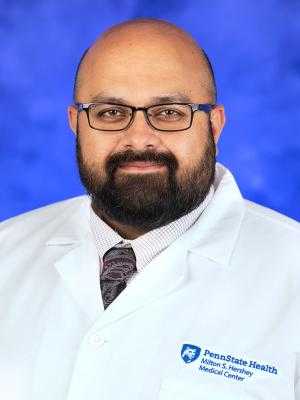
All right, Annie, are you able to put a bowel grasper in and lift up here? Here? Yeah, so open. Open. It in. Yep. In more. And as if you're lifting this up like a tent. Down and in, and up. There we go. And try to lift that up in that direction. Okay, let's see if we have any better luck now. Can you push that down? Can I get another grasper in...? Do we have another Cadiere for two? No. Do you have a bowel grasper? You do. Can I have a Cadiere in two? Coming out with two? Yep. Yep. Thank you. Okay, could I get a vessel sealer in four, please? Coming out with Cadiere. Can we open up the universal handle with a 60 purple? All right, Annie, I'm gonna have you divide this bowel. Is it okay if I come out with the bowel grasper? Yeah, I think so. I'll try to hold down. All right. Ready when you are. Coming in with the... Open it first. That's okay. No, you don't. Yeah, you just need to get that back jaw under there. So you gotta slide to the left. Can I get another Cadiere in four please? Yes. Just stay where you are for one second. Coming out in four. Yeah. I need you to be a little bit dynamic so we can see. Just like that? Yep, and slide to the left. Screen left. Close that down. Let me see where that mesentery is. Yep, you can divide that. Okay, want me to wait for 15 seconds? Yeah, sure. Yeah, you can divide. All right, that's 15 seconds. Yep, you can divide. Okay, releasing the safety. Taking it off tension. Great. Come on back. Come on, come on. Keep coming. There you go. That looked very difficult. Okay. It was a little hard. Okay, close. Come on out. I'll take a vessel sealer in four, please. Yep, if you could push that down like you've been doing. Okay, I think we will stop there. Can you keep pushing that down? I'm just gonna drop this guy under there. Can I get the fen bi back in two? Pylorus is right there. Thank you so much. Can we get two blacks with seam guards up? Just wanna verify you want the seam guard and not the Peri-Strip because we have something out there for both. Let's do the seam guard. Okay. All right, why don't you come in with your stapler here, Annie. I want you to come in kind of like in a direction like that and then we're gonna come up and do like that. Okay. Okay? Black with the seam? Black with the seam. Okay, can you move your camera from to the left to right? Yeah, yeah, that looks great. Can you guys take your orogastric tube off suction and outta the mouth completely? Yeah. One second. Open. Open. Articulate to the left. Articulate, screen left. One more time. One more time. One. Good. Yeah, all the way out, yep. Advance Annie, now you're pushing to the left. So push to the right now. All right. Here we go. You said take it all the way out? All the way out, please. Yep. Can you lift off of the back, the retroperitoneum there, Annie, a little bit? Yeah. Thanks, and close that down. Closing. Okay, closed. Okay, I'm gonna look up here now. If you could pull back towards you a little bit. Okay, pulling back. Yeah, you can... All the way out? All the way out. You can take off the Peri-Strip strings. Okay, hold on. Okay. Okay, both strings coming out. Yep, you can fire. We'll take another 60 black with Peri-Strips. Okay. Both sutures are out. Same thing that we were doing, yeah. Same thing, okay. Go ahead and fire. Fire. Okay. Safety off. Good. Okay, sliding out. Yep. And articulate. Great. And the next one, you're gonna come in and you're gonna take a little bit of this corner staple line here and you're gonna come in up through that way. Okay. Understood. How's he doing for you guys up top? Doing well. Not on any pressors. Great. Everything's good here. Perfect. Okay, hold on. Let me make sure my... Yep, opening. To the right. To the right. To the right. Push in. Close. Close. Can you rotate a little bit? I wanted to see the tips here. Okay, you're closed there? Yep, closed. You can take the strings out. Okay. Great, you can fire. Great job. Great, can I get the hook, please? In four? Yeah. Coming out four. Thank you. I think this is right here, our Station 8 lymph node. Okay. Thanks Annie. Do you want me to retract with the suction instead? This is fine for now. We'll, we'll probably got another little something in there in just a... I haven't done very many of these. So I'll still ask for permission. Yeah. If that's alright for this case. Yeah, that's okay. Okay. Uh huh. Yeah. Great job. So here's the GDA right here. You see that? Yep. The portal vein is right here. Just so that you're aware. I'm just trying to be steady, yep. Thank you. Can I get a Maryland in four please? Okay, I'll take that Maryland. Okay, four coming out. Yep. Do you want me on your Marylands or your fen? Nope, no thank you. Thank you though. So obviously you can see up here that's gonna be common hepatic or proper hepatic and common hepatic is over here. And then there's our GDA. Yep. And can I get a 2-0 silk? I got two. Have you - 15 is fine. So have you ever, Annie done the angle for stapling the GDA here? What's that? Have you ever stapled the GDA during Whipple? Once. You have. Was it with me? I think so. Yeah. So it's all about, you have to go in, articulate all the way to the left, and then you kind of have to get the tip in and then you drop the heel and then you can advance it up. Okay. Okay? Coming in with the silk. So I try to take these, one of these on one of the ends just a little bit closer, but that's okay. - [Annie] All right. All righty. Great. Pulling screen left, gonna open. Hold on. One sec. There you go. So you have to, you have to rotate that way first. Can you zoom in for me? Thank you. Okay. Now drop the heel and advance. Drop the heel and advance. About, so get your tip above all of that fat. All right. Yeah, you're gonna have to push in a little bit. Okay, pushing in. Okay, now slide down. Sliding down. So I can see the hepatic up above. Okay. You can push in more. Push in more. Close. Close. Stay there. Okay. You can fire that. Yep, safety off. Firing. Okay. Yep. Very good. Okay, closing, articulating cap. Okay, coming out. Great, and I'll take a clip now. Robo or...? Robo clip. Sorry. Can I give you these strings here, Annie? Yep. Coming in with a... Strings out. Thank you. There's the bile duct. I can hold that down. I just don't know where my... Okay. Yeah, I'm gonna take out the gallbladder now. So can I get a hook in four? Yeah, are you able to hold this down a little bit? Could you just grab it and pull it down a little bit? Do we have any blood in the canister at this point? No. No, okay. That looks like an artery. I don't think it's this. You agree? I don't think so. Do we have another specimen bag? Do we have clips ready? I'll take some of the robotic clips. Are you able to pull those down, Annie? I can take the clips in four. I take a total of six clips. Yeah. Ready to come out? Coming in on four. Another one. Annie, I usually let you guys do this, obviously, but this is just in the interest of time today. You guys usually can take out this gallbladder robotically. Three more. Coming out. One more clip and then I'll take scissors and then I'll take the hot hook. Okay. So robotic scissors. All right, coming out. Coming out. Uh huh. And then I'll take a hot hook after the scissors. Uh huh. Ready, coming out on four. Yep. Hot. Yep. You got a bag? Perfect. If you could come on in and hold this down. And we've got another 45 load ready? Yep. I will take the Maryland. This is gonna have to come down. I will take the Maryland please. Excellent. And I'll take a silk stitch, cut to 15. Yep, I'll take it. I will be able to hold that down for you in just a second. I just need to get this up. All right, yeah, hold that down for just a second there. Should be plenty of room to staple in there. Same thing. Exact same thing as the GDA. Coming out. Uh huh, advance. Yep. You may have to push in a little bit. Okay, hold on. All right. Push. Push it in. Okay, dropping the heel. Good. Close. Close. You can fire. Okay. Safety off. Great. Sorry, I'm trying not to shake. It's okay. Do your best. Yep. It usually is. Okay. Grab your suction. Okay, there's our vein, yep. Suck the blood on top of that vein, yep. Good. Okay. Now we gotta find our tunnel from the back here. All right, come on out, yep. Okay. Do you need a camera clean? No, I said I could have cleaned it for you. You could have? Yeah, while you were talking. I'm sorry. That's all right. I get lollygagging. Yeah. This is all pancreas down here too. Okay, I am gonna go back up here now and see if I can find this vein right here, which I can. Okay. Can I get the tip-up in four, please? And Annie, if you're able to pull that transverse colon mesentery a little bit to the right there. Bringing in the bowel grasper Nice. So I'm going to kind of try to get, sneak in under here and just very, very gently push that vein away from the, the neck of the pancreas there. Great. Okay. Can I get a silk tie, please? Yeah, we've gotta be really gentle with the, with the retraction there, Annie. Okay. Too much retraction of all these little' veins. Understood. Gonna come out with my bowel grasper. Okay. Awesome, thank you. Really great. Okay, can I get the vessel sealer in four, please? Yep, four, coming out. Four. Awesome. All righty. Let's, what I wanna see is, I wanna see if you can get your, your grasper in and under this here? Yep. Just, just be making sure to lift up a little bit so you're more, you're closer to the pancreas and not so much on the vein. And see, yep. And lifting up. See, see where you're pushing. Annie. Do you, you were right here. You were just about to like, sort of slam into here, but where did you come out? Okay. So you could, you, you can come in, but nice and slow and nice and gentle. Yep. And come on in a little bit more. There. And come above that node. Come above that. Very good. All right, good. Now, I'm gonna have you stay there and I'll take the hot scissors in four please. Hot scissors in four. And so what you're doing is you're just lifting that pancreas off the vein and I'm gonna divide the pancreas now, okay? Okay. You okay there? Yeah. Great, right? Okay, thank you. I don't have a stapler. And these scissors are hot, right? These scissors are hot. Yeah. We don't need a stapler right now. Okay. Yeah, it's bleeding again. So the pancreas will bleed. We'll do our best to control it. Okay. There's the duct and the bleeding. Okay, I think I'm gonna have to have you switch out to a suction. Come on out there Annie. Coming out. Yep. All right, I'm gonna take this off. I'm gonna have you suck. I'm gonna try to lift up on the rest of this pancreas here. A little bit more in if you can. Okay, come on out. Let's see where that duct is. I did see something. It's right there. Okay, great. Let's stop that bleeding. Yep, just try to keep it perfectly clean like you are doing. Can you suck in here a little bit and then above that. Awesome. You didn't have it replaced right on the scan. This is where it would be, but this doesn't look like anything to me. Real gentle there, Annie. Really gentle, okay. I am gonna take the, the hook in four, please. Okay, I'm gonna take a Maryland please. And I'm gonna take a silk tie. 15 centimeters. Silk tie. Thank you. Annie, do you have scissors? Yeah, lap scissors. Yeah, lap scissors. Coming in. Lap scissors. And just cut it down here a little bit. Right there is perfect, yep. And then I'm gonna take robotic scissors in just a second. Okay, robotic scissors? Coming out in four? Yep. Coming in with scissors. Do you want them hot? Nope. Thank you for oiling them. I will have these ones too for you. Sure. Pieces. Both pieces are out. Great. Okay. I'll take the hook please. Scissors out. Coming in. Thank you. I can pull that back for you. Okay, thank you. Yeah, that'd be really great. Yeah, yeah, that's fine. Yeah perfect, right there is good. Yeah. Okay. Are you able to push down on this a little bit? Yep. Just like that, perfect. Let's see where we're at here. Okay. Can I get the vessel sealer in four, please? Coming out with four. Thank you. Okay, can you, let me see, is this hand doing anything right now? No. Can I get suction in two? Suction in two? Yeah. Here you go. We will come back. Yeah, Annie, if you could push this down just a little bit. Okay. Can I get a Maryland in, I think two please. Okay. Suction coming out. Yep. Great, what am I gonna ask for now? So I'll give you a lay of the land. Yeah. So stomach is up here, neck of the pancreas is here and it's divided. This is all this big mesentery. There's SMV going all the way up there. Okay. And it's obviously, the crux is... There isn't much I don't think. Let me get in here and pull that that way. Is that... I think right here. You agree? Yeah. I think that's okay. I think so too. Where are we bleeding from? We should check. You okay with that? Yeah. Estimate looks good, right? Right there? Yeah. This should all be fine. Here? Yeah. Yeah, I can come outta here and take some of that. I'm gonna regrab this jejunum. You agree with that? Yeah. Again, it's not pancreas cancer. Although we're pretty, pretty close to the SMA. See Annie, this is - between Dr. Brahmbhatt and I, it's a bit of a dance, right? We're both just trying to do what we can to provide the best exposure. I don't think there's really very much there left. No. Okay. Bag. Thank you so much. Yeah. That looks good. Yeah, don't know about that, but... In your eyes, that duodenum looks the worst. It's the worst. But you know, I think if you and I, you know, it just gives you a little bit of additional confidence when you've got another attending in just in case you do something bad. So you can just do, you know, take care of it, and... So, we'll take a 15, 15 bag. Another one? Yep. Hey, thank you so much. So that's the uncinate. It's sort of like the crux of this operation, at times. So, we'll get that next 15 bag. We'll put this in, we'll take our specimens out and then we will start to reconstruct. No real needs to do margins today because it's a duodenal mass. We're well away from everything, so... But did you see any, how he was kind of like in there and then kind of getting around the vein and lifting it up and away? Yeah. Yeah. It takes... I'm glad I wasn't doing it. Yeah, it takes time, yeah. You, you pull on the vein pretty hard. Yeah. And it gets... Yeah. The most I can do is gentle petting. Yeah, no, but you've done really well with all the stapling and everything like that. Coming in with that. Yep. Drop it in low here. So that it opens up. Yeah. All right, start lifting up. You okay? Sorry. Yep, sorry, I didn't realize you heard that. Oh, yeah. Am I bumping into you? Close that up. Let's take all the instruments out. Yeah, all those instruments can come out, including the camera. All right.
CHAPTER 8
Can I grab it on the curve then, or it doesn't matter? Anywhere. Perfect. All right, I'll take those 2-0 silks. Yeah, but can take 'em all at the same time. All right. All right, one heel coming in. All of them? All three of them at the same time? Oh, I'm sorry. That's okay. Here's one. Okay. Then I'll grab the next two in a row. The next. Sorry. No problem. Three in all together. Well just wait right now 'cause I'm placing a stitch here. Okay, next stitches, times two. So I would try to again, hold them out, one of the ends. It's not. Okay, and we've got 5-0 PDSs, we get six of them cut to 15 centimeters? Don't pull the bowel away from the pancreas right now, if possible. Can I get a hot scissors in four please? You think that's in? Yeah. I think so too. I'll take the suture cut needle driver and I'll take two of the 5-0 PDSs. And then I'll have you grab the suction if possible. Yep, more suction sort of in the... Can you suck on this pancreas duct? Suction please. Yeah, and so down here as well so that it doesn't reaccumulate back up there again. Back at that PJ. Awesome, thank you. So now I'm gonna try to get this. Can you section up here? It just doesn't, why isn't that going in easy? What is going on here? Something is not right. That's what it should be doing. Okay. Can you suck up here again? Okay, I'll take the next two stitches. So we have seven needles in now. Seven, okay. Three needles coming in. Celina's here. Great, thank you. Can you suction there? Suction there again. Can I get a little suction up in here too? Awesome. I am gonna give you a bullet. Yeah, gonna give you some sutures in just a second here, Annie. You can come and take this one.
CHAPTER 9
Can I get a hook in four please? Coming out in four. And then after the hook, I'll take a scissor and then a, I'm gonna take a bunch of 5-0 PDSs. Awesome, thank you there Annie. How, how long you want those cut? 15, please. Okay, I'll take a scissor please. Four coming out. Yep. Scissors coming in. They're hot. Okay, perfect. It's clutched. And could I get, could you bring in the suction? We're going to leak a whole bunch of bile here. You ready? I would go underneath. Yep, underneath. Okay. I'll give you this. Uh huh. I wanna give you that little nubbin. Huh? I wanna give you this little nubbin. Mm hmm. Are you sending this? No. No? No. Coming back in with the suction. Okay. All right, I think I'm gonna do my HJ right about, maybe just have a quick look, mesenteric side, anti-mesenteric side about here. So right... Do you wanna push in there? Yeah, that'll help. Yeah. Perfect. Okay. I'll take a suture cut needle driver in four. And I'll take a 5-0 PDS. Cut to 15. How's he doing for you up top? He's doing great. No issues? No pressors? Needle driver coming in. Nothing so far. Great, thank you. And then 5-0 PDS? Correct. And this is 15 centimeters? Yes sir. Okay. We have one needle in. Thank you. All right. I'll take another one of those 5-0 PDSs. Can I get a little suction? Coming in with suction. Okay, awesome. I am gonna use this one on its own for a while and then I'll probably need a few more. You gonna reuse it? Yeah. All right, you wanna suction up in here? Can you suction more? The next thing I'll take is another one of these stitches cut to 15. Bring in another needle for me, if you can. And I'll give you this one. Can you suck in here now again? Yeah. Mm hmm. Annie, can you push the bowel this direction? Thank you. Annie, can you get a bowel grasp or a bullet? Yep. Coming in with a bullet. Do you want me to pull it out? Yes, please. Needle out. Thank you. Would you like the sprayer for the Tisseel? Yes, please. If you could just clear that suture out. It's out. Thank you. Can we also open up a 3-0 V-Loc. 3-0 V-Loc? Yeah. Like a nine-inch 3-0 V-Loc. Yep, if you could just clear all of the suture off of that instrument, that's great. What's that? Just clear the suture off of it, if you could. So there's no more suture coming back in. Okay. It's out. Thank you. V-Loc? Not yet. We have to do our stapled anastomosis first for our GJ, but we had to modify things a little bit, so we're gonna have to go refined our limb, tack it to the stomach. Okay. Can I get, yeah, that's perfect. Can I get a Cadiere in four and a fen bi in two? And then also you can come in and take this Ray-Tec out. Can I get another...? Thank you. Annie, I don't know if you're able to help here, but we need to flip all of this omentum up. I'll grab a bullet or a bowl grasper? Bowel grasper would be great. There we go. Okay, let go.
CHAPTER 10
This has gotta be the loop going under, I think, under the mes. Yep. And there's that. So we'll, 10, 20, 30. Pathology was wondering if there was more frozen samples. No more frozens. Nope, no more frozens. And now let's let all this colon back down as best we can. Okay. Can I get a suture cut needle driver in four, and a 3-0 silk cut to 15? 3-0 silk. Just the one? Just the one right now, yep. And so Annie, what you're gonna do is you're gonna hand me the stitch and I have to put the stitch between the stomach and the intestines and you need to hold the intestines up to the stomach. Okay, with the bowel grasper? Yep, just hold it up. Exactly. 3-0 silk. Okay. Got it. All right, could you grab the intestine below me? I'm gonna let it go. Okay, don't let it fall away. Okay. Okay, I'll give you this suture back. Letting go of the bowel. Yep. I'll take a hot scissors in four please. Four. Scissors. Great. I'm gonna make a gastrostomy right about here. Are you oversewing the staple line? I'm closing it with the V-Loc. I'm not oversewing the staple line, per se. I'm gonna close the common enterotomy with the V-Loc. As you can see, the stomach is thick. Can I get a Cadiere in four please? Small limb in the intestines. Big limb in the stomach. And I think we'll start with the intestines first, if that's okay with you. So I would say angle to the left a couple of times. Sorry, the, the right. Yeah. Yeah. And rotate your stapler like, so the bottom jaw is on the bottom. Yep, and, and, and do it a bunch. Rotate to the right, right, right, right, right. No. I'll articulate it back. Straight. Make it straight up and down. Okay, up and down. Articulate it all the way to the right. All the way to screen right. All the way. Keep going, keep going, keep going. Keep going, keep going, keep going, keep going. All the way. Yeah, that's all the way. Great. I'm running into the... What are you running into? Oh, oh, I'm running into your bipolar. My what? I'm hitting your bipole. My bipolar? Yeah. Yeah. Oh yeah, much better. Okay. Let's get the stomach in here now. Okay, now gentle, just one second, okay. Okay. Not moving. Hold on, you're forcing my stapler. Okay, sorry. Are you still in there? Yep. Okay. One second. One second. - [Annie] Okay. Your four's still hitting my stapler. Which one? Four. Four? Okay. Yeah, that's better. Okay, advance if you can, nice and gentle. Slowly. Is it advancing easily? Yep. Once... Hold on, your four's hitting my stapler hand. Hold on. What is? Four is hitting your stapler. My four? Yep. On the outside. On the outside, okay. So you got to... Can you go along the ribs there? You're on top there. Close that up. Okay, it's closed. Okay, let me have a quick look here. Open. Okay, open. And advance when you open. Okay. Advance. Close. Okay, advancing a little. Close. All right, closed. Okay, fire that. Okay, safety off. No, no, not green button. You already pressed the green button, right? Yeah. To fire, right? So you just gotta pull it all the way back. Annie, do you know how to use these staplers? No, I am, sorry. All righty. Okay, that looks great. It was thicker than I would... Okay, all right. I'll take a large needle driver in four and I'll take a mega if you've got it in two, and then I'll take the V-Loc. All right, can you come grab this guy? Can I get my vessel sealer? All right, Annie, right, I'll take a scissor in two. Okay, suction out. Mm hmm. Good. Okay.
CHAPTER 11
All the instruments out, you can undock the robot. We have to do a bunch of irrigation lap, We have to do our tap block and we have to secure our drain and then place our Tisseel. But we can do that all lap. 2-0 nylon for that? 2-0 nylon for the drain, yeah.
CHAPTER 12
Can you hold that port in so I could...? Oh yeah, sorry. Thank you. And I'll give this to you. I'll take the rest of the irrigation. Or sorry, the TAP block stuff. Thank you. We can give this back to you. Alright, let's do a little bit more irrigation. I'm gonna suck as well, but I can... Is it suck, suctioning? Yeah, I think it is. Yeah. Awesome. Can we squeeze? Yep. There we are. Let's look at the GJ. PJ. It's pretty thin stuff. Can I get a bowel grasper? You can back up the camera a little bit. Sorry, back to the left a little bit, but down. All right, Tisseel. All right, we'll start with this PJ. You are done. I'll take the next one? All right, let's hope those don't leak. Any other fluid to suction out here? Everything the drain can do. Okay. I'll grab this. Bowel grasper. Yeah, I'll grab a bowel grasper. Can I get a bowel grasper? Or bullet, either, whatever you got. Sounds good. I'll take 2-0 nylon. Yep. Come on out. Yep. All right, we're gonna take everything out.
CHAPTER 13
Once you're done with that Annie, I'm gonna have you grab a 3-0 Vicryl. I'm gonna have you plicate this rectus. Heavy scissors. We'll wait for the Vicryl first. The table is just a little bit turned. Yeah, of course. Can we get the table up a little bit please? Okay. Even got ready with my step. Perfect, thank you. Let me know when. That's good. Is that good? 3-0 first? Yeah. Yeah, 3-0. Yeah. And I'll take a Kocher. I'll take a DeBakey. This you don't really need a Kocher for, but that's fine. But it's basically... Kocher? This stuff to this stuff. Okay. And you're gonna do it in a vertical fashion, so yep. We're gonna do it running. Yep. This is basically just plicating the rectus and, and closing the peritoneum. You have a DeBakey? I'm just kidding, I got one. You can do it in one. Okay. Because it looks like it's just coming so easy for you there. Yep. Just closing this. Yeah, if you keep chasing that down, it's not gonna close. And then come to the rectus next. Good, and you can tie that to itself here. So just the usual pathway? Yep, should be pathway. Okay. And we use a closing tray? I don't think we have one, because it's a robotic case, there isn't much to close, so... So fortunately these incisions don't hurt that bad. TAP block, IT morphine. Usually people can, you know, pretty quick, but we'll just see what his... I can't believe all of it came out of this incision. That whole specimen. Yeah. Do you have a bulb? Have a what? A bulb. Right here. Oh, okay. I got that. All right, do you have Vicryl, or unless do you... Yeah, 3-0 Vicryl, deep dermals. Oh yeah, can we get that full strength chlorhexidine? Yeah. Full strength chlorhexidine? Yeah. Hibiclens. The Hibiclens.
CHAPTER 14
Today in his operation, he had multiple factors that put him at a higher risk for developing a postoperative pancreatic fistula. Fortunately, our EBL, or our blood loss, in the case was only 100 milliliters, which is beneficial. But his indication for surgery today was duodenal adenocarcinoma, or duodenal cancer, and it's not pancreas cancer or chronic pancreatitis, so that's an increased risk factor. Other factors that make him at a higher risk for developing a postoperative pancreatic fistula include the fact that he had a very soft pancreas and that he had a small duct. I think his duct was probably between one or two millimeters. For those reasons, he's got a higher risk of a postoperative pancreatic fistula. His anastomosis was a little bit challenging due to the fact that he had a small duct, but overall I think it went well. I had a little bit of a challenge getting the internal pancreatic stent into the duodenum at first, but it ended up going in fine afterwards. I wouldn't be trying this unless you've been trained to, to do this. I also wouldn't do this unless you're comfortable doing this operation open because in the event of bleeding, you need to convert to an open operation emergently. So having the ability to do this and having comfort in being able to do this in an open fashion is the first thing. I think it's important. This case is also associated with a very significant learning curve. There have been a lot of studies that have looked at the learning curve associated with this operation, and it ranges from about 30 to 80 cases. And so if you're going to be doing this operation, you should be doing it with at least two experienced surgeons. In particular, the robotic case for this procedure is associated with numerous benefits. It's associated with less blood loss. And we saw that today with a relatively low EBL. It's associated with decreased postoperative pain. Obviously the cosmesis is a little bit better with the smaller incisions. It's associated with an increased return to functional recovery, so people get back to their baseline faster. Patients require less narcotics while they're in the hospital. There's early return to bowel function and in general, people just seem to do a lot better and can return to their baseline a little bit quicker with this operation. A lot of the times when we're doing this operation, it's because people have cancer and they need to get to their next set of treatment and typically that's systemic chemotherapy. And with this type of operation, they're able to frequently get to their systemic chemotherapy a little bit quicker. When you do it in an open fashion, you know, the first thing that I do is I mobilize the right colon, Kocherize the duodenum. Once the duodenum is Kocherized, then I've opened up the ligament of Treitz, I get around the GDA and the bile duct. I then create my retromesenteric, or sorry, my retropancreatic tunnel above the superior mesenteric vein. I do that to identify and make sure that the, the cancer is resectable. At that time, I then divide everything in a counterclockwise fashion. That's completely different from what we did today where the first thing that we divided was the jejunum. I knew that this was resectable based on the imaging, and at this point doing this operation, I'm only doing it on very select patients that have an appropriate body habitus for this operation, but also have an appropriate indication such that it's not involving any of the major vasculature in that area, the superior mesenteric vein, superior mesenteric artery or branches of the celiac. You know, we very closely follow these patients postoperatively. We monitor their drain amylase to determine their risk of developing a postoperative pancreatic fistula. As I mentioned, this gentleman has a relatively high risk, but at the end of the anastomosis I was relatively confident with it. So, I'm hoping that he won't develop one. And we'll see. Otherwise, know it can be a bit of a stressful operation and it's something that should be done only by experienced surgeons who understand the operation, who can do it in an open fashion and who've been trained to do this in a robotic manner.

| Publication Date | 11/28/2025 |
| Article ID | 505 |
| Production ID | 0505 |
| Volume | 2025 |
| Issue | 505 |
| DOI | |
| https://doi.org/10.24296/jomi/505 | |